
Girls Education in Tanzania: The Ripple Effect That Changes Everything
How Girls Education in Tanzania Transforms Families, Economies, and Entire Communities
Girls education in Tanzania is more than a development goal — it is one of the most powerful catalysts for long-term social and economic transformation.
Halima was twelve when her father announced her engagement to a man three times her age. As the fourth daughter in a family struggling with drought-related crop failures, her schooling was considered an unnecessary expense. Her future seemed predetermined.
Then a community advocate trained through the Sauti Sahihi program intervened.
Today, at seventeen, Halima ranks first in her class and dreams of becoming a doctor. Her story reflects a broader truth: when a girl stays in school, the impact extends far beyond the classroom.

The Multiplier Effect of Girls Education in Tanzania
Development economists consistently identify girls’ education as one of the highest-return investments in emerging economies.
The Evidence Is Clear:
One additional year of secondary school can increase a girl’s future earnings by up to 25%
Each additional year of girls’ schooling can increase a country’s GDP growth by approximately 0.3%
Educated women have fewer, healthier children
Mothers with secondary education are significantly more likely to educate their own children
Communities with educated women experience lower rates of gender-based violence and improved health resilience
These are not abstract statistics. They are measurable shifts happening across Tanzanian communities.
Beyond the Individual: How Educated Girls Transform Communities
In Mwanza, where the Kesho Bora Educational Initiative launched a girls’ coding club, fifteen students began learning digital skills. What followed surprised even local leaders.
Within two years:
Early marriage rates in the area dropped by 30%
School retention among younger girls increased
Parents began prioritizing daughters’ education
“When my younger sister sees me building a computer program,” explains sixteen-year-old Neema, “she doesn’t think about marriage — she thinks about what she can create.”
Development experts refer to this as the role model effect. When girls see tangible examples of success, aspiration becomes realistic rather than abstract.
The Economic Reality: Breaking the Cycle of Early Marriage
One of the biggest barriers to girls education in Tanzania is economic pressure.
In drought-prone or low-income regions, early marriage may provide immediate financial relief through bride price. For families struggling to survive, this short-term benefit can outweigh the perceived long-term value of schooling.
Economists call this dynamic “the tyranny of the present” — sacrificing greater future returns for immediate survival.
However, the long-term cost of early marriage is profound:
Lower lifetime earnings
Increased maternal health risks
Higher child mortality rates
Reduced economic mobility for future generations
Investing in education disrupts this cycle permanently.
Addressing the Barriers That Keep Girls Out of School
Financial hardship is only one piece of the puzzle. Sustainable solutions must address interconnected obstacles:
1. Unsafe Routes to School
Long walking distances increase vulnerability and absenteeism.
2. Inadequate Sanitation Facilities
Lack of gender-separated latrines contributes to dropout during menstruation.
3. Cultural Norms
Deep-rooted beliefs about gender roles influence educational decisions.
4. Limited Female Role Models
A shortage of female teachers reduces aspirational visibility.
Effective interventions require a systems approach.
A Comprehensive Model for Sustainable Change
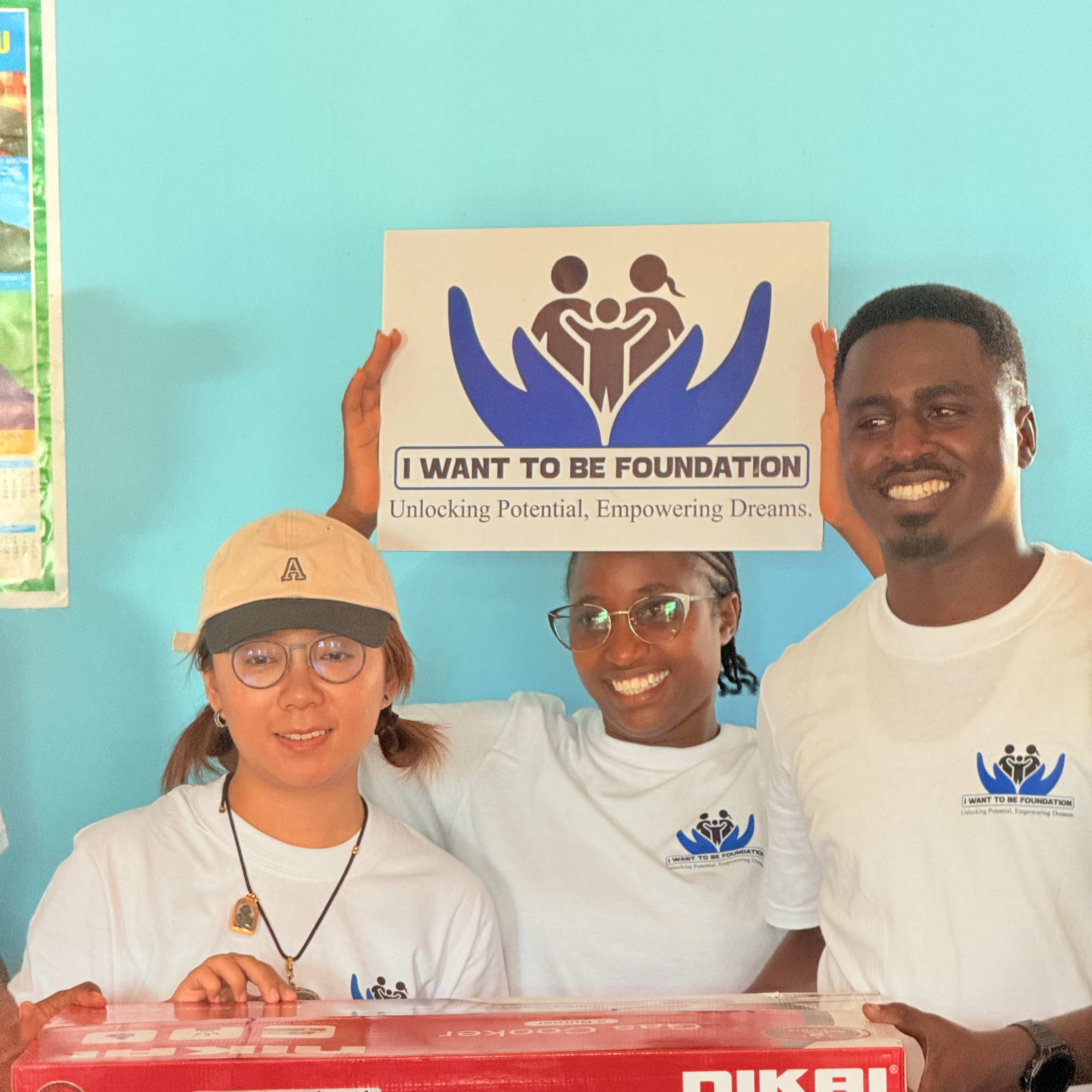
At I Want to Be Foundation, we approach girls education in Tanzania holistically.
Our initiatives include:
Scholarships with family stipends to offset lost household labor income
Community dialogues engaging elders and fathers in cultural discussions
Solar lighting installations improving safety
Gender-sensitive school infrastructure
Teacher mentorship programs developing female leaders
Skills programs such as coding clubs and health leadership training
When families witness daughters leading community initiatives, earning certificates, and achieving academic success, perception shifts.
Girls are no longer viewed as economic burdens.They are recognized as long-term assets.
The Long-Term Return on Investing in Girls Education in Tanzania
Supporting girls’ education creates exponential impact:
Higher lifetime earnings
Improved maternal and child health
Greater climate resilience
Reduced poverty rates
Stronger local leadership
Unlike one-time aid, education compounds across generations.
When one girl completes her education, her children are more likely to attend school. Her household income increases. Her community health outcomes improve. Her nation’s economy strengthens.
Few interventions offer this scale of return.
Education as the Right to Dream
“Education didn’t just give me knowledge,” Halima recently told us. “It gave me the right to dream.”
That right should not depend on geography, gender, or income.
Girls education in Tanzania is not merely about textbooks and classrooms. It is about autonomy, dignity, economic resilience, and generational transformation.
When a girl stays in school, everything changes.


Comments